
Business Communication Essentials, 7th Ed.
Chapter 2. Collaboration, Interpersonal Communication, and Business Etiquette
View original content
More and more companies rely on the social web to influence customers before the sale and support them after; these statistics explain why social help is becoming so pervasive.
"We usually look for nervousness as one of the signs of lying.
"So we’re taking a stand here," begins Terry Heick, director at TeachThought.
Melanie Pinola (photo, left) writes on the topic of HSPs (Highly Sensitive Persons).
"It’s pretty obvious that what you say in a presentation matters more than the way you say it.
According to Jeff Mann (photo, left), a Gartner research director, "The rapid adoption of smart devices, both in the workplace and outside, has raised expectations about accessibility and user experience in the workforce.
Vivian Giang covers the topic of what you should do when you are sick and faced with the need to shake someone's hand.
Sallie Krawcheck (photo, left) shares her thoughts on the topic of building a successful team.
"I’ve posted a great deal on working with difficult people and how to make people like you," says Eric Barker (photo, left).
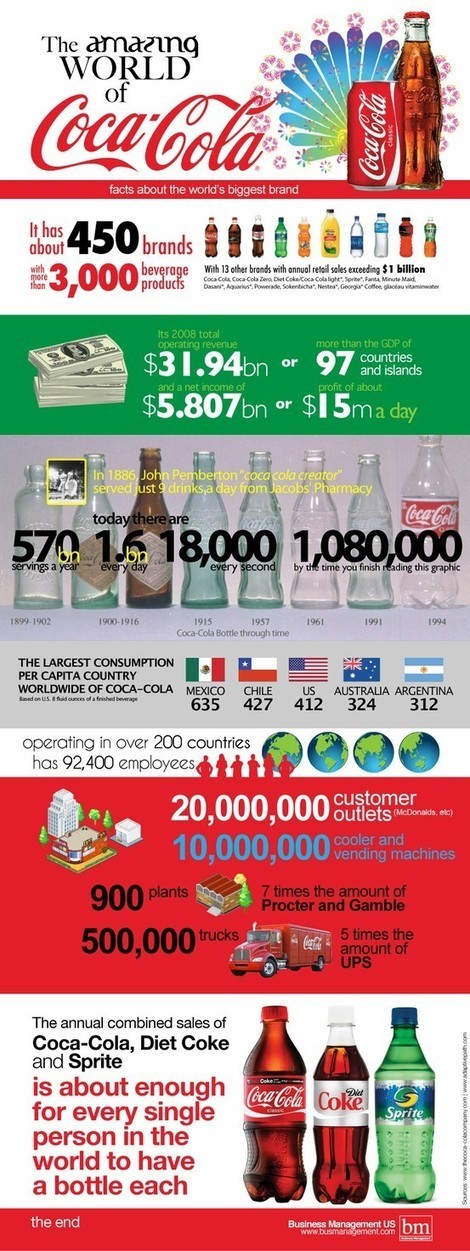
The amazing world of Coca-Cola via an infographic.

The Money Chart from Randall Munroe’s webcomic xkcd.

Everyone tries to network, but few people do it well, often making the same basic mistakes.
"In this Business English Podcast lesson we continue our series on making telephone calls in English by looking at how to deal with technical problems and clarify information using alternative choice questions.
Like "jumbo shrimp" or "amicable divorce" the phrase "conflict resolution" is an oxymoron.
This Business English podcast is the second part of a two-part series on making, rejecting and accepting suggestions.
This is the last in our three-part Business English Podcast series on cold calling.
We often assume that as people rise up the career ladder they become more skilled and more confident, but many successful people still encounter the 'fear factor' when dealing with more senior people.
On any given day we're lied to from 10 to 200 times, and the clues to detect those lies can be subtle and counter-intuitive.
According to Steve Tobak (photo, left), "Physical body language isn’t the only way to read people’s emotional state.
Last year, according to Paloma Vazquez (photo, left), "Scott Belsky, Founder & CEO of Behance, made more thoughtful communication one of his personal objectives in the new year.